

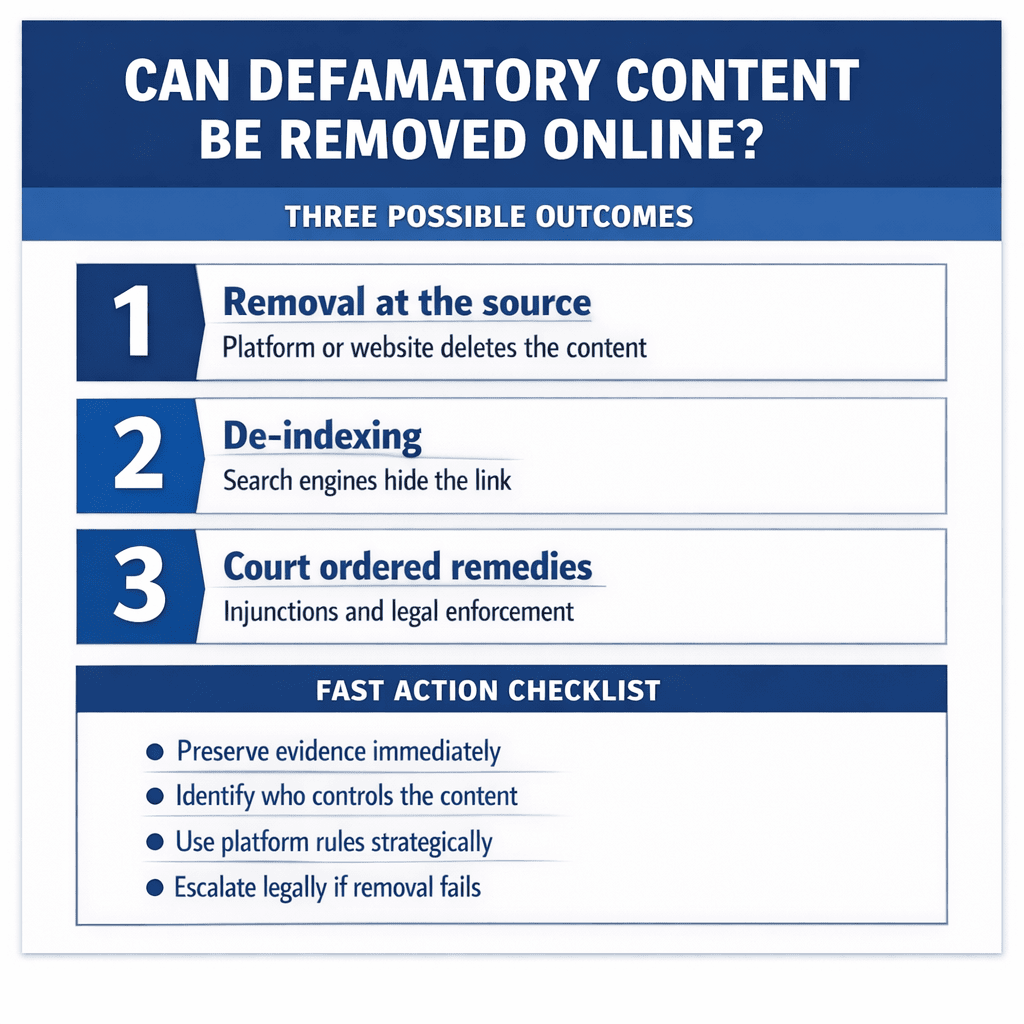
Finding a false, reputation-damaging post online can feel like you have lost control of your name overnight. The good news is that defamatory content can sometimes be removed, blocked, or made much harder to find. The challenge is that removal is rarely one simple step. It is usually a process involving evidence preservation, platform policies, legal strategy, and sometimes court orders.
This guide explains how online defamation removals work in Toronto, what results are realistic, and how Powell Litigation approaches these matters strategically.
What Counts as Defamatory Online Content?
Not every negative comment is defamatory. Defamation generally involves a false statement presented as fact that harms reputation. Common examples include:
- Fake reviews accusing a business of criminal or unethical conduct
- Social media posts alleging fraud, abuse, or professional misconduct
- Forum posts naming an individual and spreading false allegations
- Edited screenshots or images that create a misleading narrative
For a deeper explanation of how Ontario law draws this line, review what qualifies as defamation in Toronto and how to tell if online content is legally defamatory.
Can Defamatory Content Actually Be Removed?
Yes, but removal can mean different things. In practice, there are several possible outcomes:
- Removal at the source, where the platform or website deletes the content
- De-indexing, where search engines stop displaying the content in search results
- Restricted visibility, such as regional blocks or disabled sharing
- Corrections or retractions that reduce reputational harm
The correct approach depends on where the content is posted, who controls it, and whether platform rules or court orders apply.
Step One: Preserve the Evidence
Before contacting the poster or reporting the content, evidence should be preserved. Online posts can be edited or deleted without notice.
- Screenshot the content showing usernames, dates, and URLs
- Save direct links and record access times
- Capture comments, replies, and shares
- Preserve private messages or emails connected to the post
Proper evidence preservation becomes critical if legal action is required.
Step Two: Identify Who Has Control
Online content often has multiple points of control:
- The individual who posted the content
- The platform hosting the post
- The website hosting provider
- Search engines displaying the content
Knowing who can actually remove or restrict the content determines whether a report, demand letter, or court application is most effective.
Using Platform Policies Strategically
Platforms frequently deny generic defamation reports. Removal is more likely when reports align with specific policy violations such as impersonation, harassment, or disclosure of private information.
When search results are the primary issue, legal reporting tools may help. When search results are the primary issue, legal reporting tools may help. Google provides a formal process for legal removal requests through its reporting system.
Reporting without a strategy can delay resolution or unintentionally amplify the content.
Direct Resolution With the Poster
In some cases, a well-crafted legal demand results in fast removal or correction. The risk is that an emotional or poorly worded response can escalate the dispute.
Effective demands typically:
- Focus on false statements of fact, not tone or opinion
- Explain reputational harm clearly
- Set clear expectations and deadlines
- Preserve the option of legal escalation
When Court Orders Are Necessary
If defamatory content persists or the poster is anonymous, court relief may be required. Depending on the facts, courts may grant:
- Injunctions ordering removal or prohibiting republication
- Orders supporting de-indexing where harm is ongoing
- Damages for reputational loss
Canadian courts have recognized that court orders may be necessary to prevent continued harm where voluntary removal fails, including in cases such as Google Inc. v. Equustek Solutions Inc.
De-indexing Versus Deletion
De-indexing removes content from search results but does not erase it from the internet. While it reduces visibility, the content may still exist and be shared directly.
For many clients, de-indexing is a harm reduction tool rather than a complete solution.
Why Some Content Is Harder to Remove
- Anonymous or pseudonymous posters
- Foreign-hosted websites
- Reposts and screenshots after deletion
- Claims framed as matters of public interest
Ontario’s anti-SLAPP rules also require defamation claims to be carefully structured, particularly where expressive activity is involved.
When to Speak With a Defamation Lawyer
Legal advice is especially important when defamatory content:
- Appears prominently in search results
- Threatens employment or professional licensing
- Involves serious allegations such as fraud or criminal conduct
- Is part of a coordinated or repeat campaign
Powell Litigation assists clients with online defamation removal strategies that balance speed, cost, and long-term reputation protection.
For a broader overview of remedies, visit Toronto online defamation.
This content is for general information only and does not constitute legal advice.